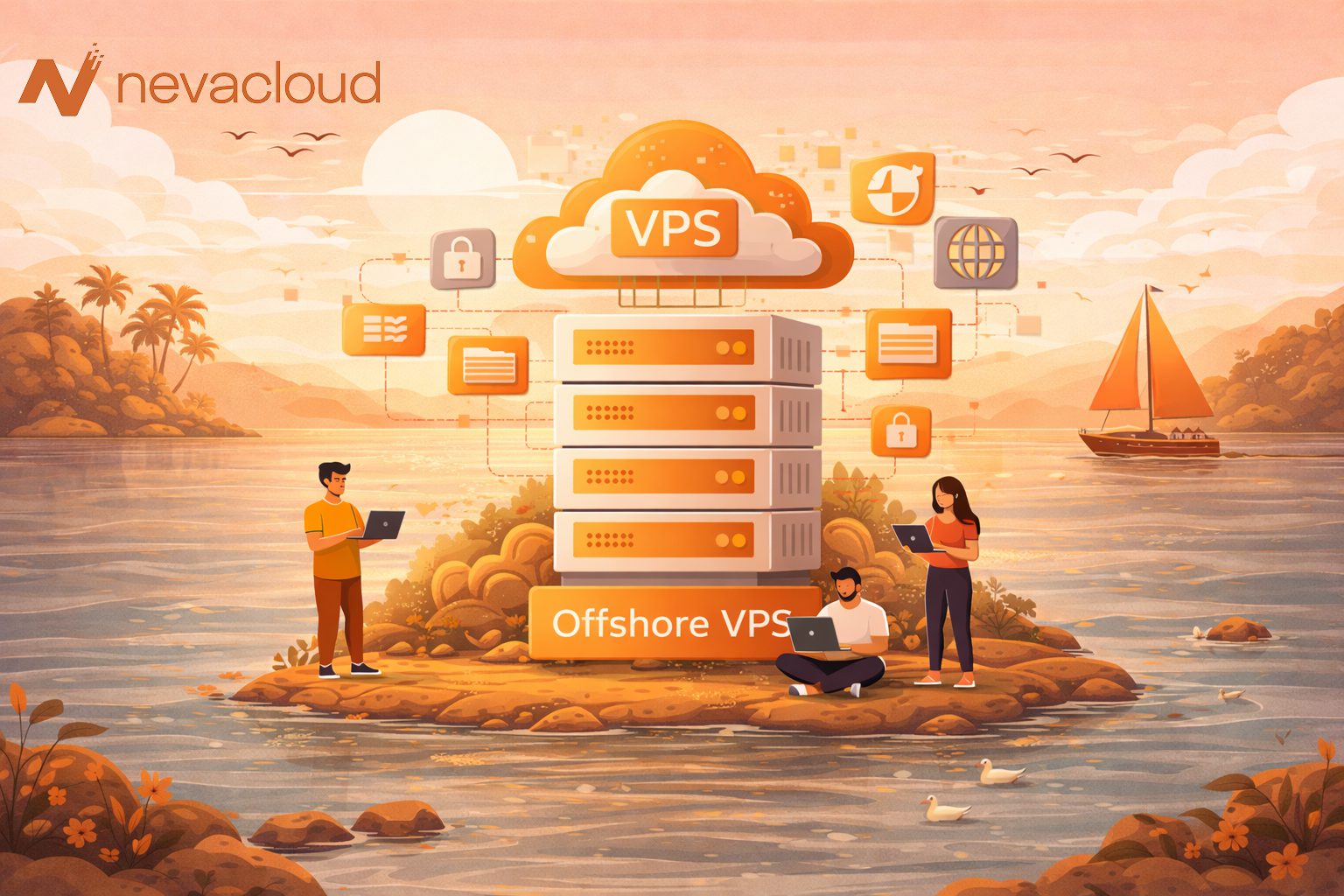
Offshore VPS: definition, advantages and disadvantages (complete)
Digital infrastructure needs are no longer limited by the geographic location of the country. Many companies operate global websites, applications, and services from various regions. To solve this problem, Offshore VPS is an option that offers location flexibility, complete control, and privacy considerations. However, this option is not an instant solution to all needs.
Certain performance, regulatory and operational factors must be understood from the start. This article discusses the concept of Offshore VPS in practice, including the reasons for its use, the benefits that can be obtained and the risks to be managed. If you manage cross-border projects or need a more adaptive hosting strategy, understanding this approach will help you make more accurate and responsible decisions.
Contents
What is offshore VPS?
Offshore VPS is a private virtual server service placed in an overseas data center from the user’s main business or location. Technically, VPS still works with the concept of virtualization, so each user benefits from isolated resources and full administrative access. The term “offshore” refers to the physical location of a server located in a different jurisdiction.
This approach is often chosen for global traffic distribution needs, privacy considerations, or specific compliance strategies. Offshore VPS is also part of the offshore hosting ecosystem, which includes shared, VPS and dedicated servers. Although similar in function to a traditional VPS, the differences in location mean that aspects of latency, data policies and technical support need to be considered from the start.
Advantages of offshore VPS
Offshore VPS offers a number of strategic benefits for businesses and digital projects operating across borders. These benefits are not only technical, but also impact operational flexibility and risk management.
1. Server Location Flexibility
The main advantage of Offshore VPS is the freedom to choose the data center location according to the needs of the public. You can place servers closer to key markets to reduce latency. This strategy helps improve access speed and overall user experience. Location flexibility is also useful for creating more reliable multi-region architectures. With this approach, traffic can be distributed more evenly and more stably.
2. Full control over server configuration
Offshore VPS provides full administrative access, including root control and system settings. You can customize the operating system, web server, and application stack according to the project needs. These controls are important for optimizing performance and security. Unlike shared hosting, each resource is isolated and can be managed independently. As a result, application stability is better maintained.
3. Easier Scalability
Scalability is a significant added value to Offshore VPS. You can upgrade CPU, RAM or storage without complicated server migration. This approach is suitable for businesses that are growing rapidly or experiencing seasonal traffic spikes. With seamless scalability, capacity planning becomes more accurate and cost-effective.
4. Extensive Privacy and Data Policy Options
Server locations in different jurisdictions provide more flexible data policy options. Some countries have different regulatory approaches to data storage and processing. This flexibility is useful for international projects with varying compliance needs. However, understanding the law remains imperative so that usage remains responsible.
5. Suitable for projects with a global audience
Offshore VPS is relevant for websites, applications or services with cross-border users. Strategic server placement can help reduce response times in various regions. This approach also makes it easier to implement load balancing and service replication. As a result, the quality of service remains constant even if traffic comes from many locations.
6. Diversification of infrastructure risks
Using different server locations helps reduce the risk of a centralized outage. If an area experiences disruption, services can always be diverted to another location. This strategy increases system resilience and business continuity. For projects that depend on availability, diversifying locations provides a real operational advantage.
Disadvantages of offshore VPS
Although offering extensive flexibility and control, Offshore VPS also has a number of limitations that should be considered before use. These deficiencies relate to technical, operational and compliance aspects that can have a direct impact on the performance of the service.
1. Risk of latency and performance degradation
Overseas server locations may increase the network distance between the user and the system. This distance often results in higher network latency than local servers. For response time sensitive applications, this condition can degrade the user experience. Although using CDN and optimizing routing is helpful, the results still depend on the quality of connectivity between regions. Choosing the location of a data center is therefore a crucial factor.
2. Technical support and communication challenges
Many offshore VPS providers operate in a different time zone than the user. These differences can slow down the response when a technical incident occurs. Additionally, differences in language and service standards can make communication difficult. In critical situations, support delays can potentially extend downtime. This risk must be anticipated by choosing a service provider renowned for its global support.
3. Regulatory risk and legal compliance
The use of servers abroad is not automatically exempt from legal obligations. Each country has its own rules regarding data, privacy and content. If not properly understood, businesses can face serious compliance issues. For example, certain types of data remain subject to the regulations of the user’s country of origin. Therefore, the assessment of legal aspects must be part of technical planning.
4. Complexity of infrastructure management
Managing cross-border servers adds a layer of operational complexity. Monitoring, backup, and troubleshooting require more careful coordination. Differences in network standards and vendor policies can also complicate the integration process. For small teams, this burden can drain time and resources. Without clear procedures, the risk of configuration errors is higher.
5. Dependence on supplier quality
The quality of Offshore VPS services highly depends on the reputation and infrastructure of the provider. If the provider has an unstable network, the impact will be felt immediately on application performance. Migrating to another provider may also be more complicated due to differences in location and policies. This condition requires more serious research before choosing a service.
Tips for Choosing the Right Offshore VPS
Choosing an offshore VPS cannot be based on price or location. These decisions impact the performance, security, and long-term stability of the service. Here’s a handy guide you can use as a checklist.
1. Determine the most relevant server location
The data center location should be close to the majority of primary users. The goal is to reduce latency and maintain consistent response times. If your audience is dispersed, prioritize regions with strong international connectivity. Also consider the quality of routing and the availability of backbone lines in the area.
2. Evaluate the reputation and credibility of the supplier
Check uptime history, network quality, and technical support response. Read technical documentation and independent reviews, not just marketing claims. Transparent providers typically provide SLAs, status pages, and infrastructure details. This allows operational risks to be measured from the outset.
3. Pay attention to specifications and scalability
Make sure the CPU, RAM, storage, and bandwidth match the application needs. Choose a service that allows upgrades without complicated migrations. Scalability is important to anticipate traffic growth or seasonal peaks. This way, capacity planning remains efficient and controlled.
4. Review security and backup policies
Check basic security features like firewall, DDoS protection, and secure SSH access. Make sure clear automatic backup and restore options are available. Security is not an added feature, but an operational basis. Without it, the risk of downtime and data loss increases.
5. Understand regulatory and compliance aspects
Learn about the data rules and content policies of the country where the server is located. Certain types of data remain subject to the regulations of the user’s country of origin. Consult the legal team if necessary, especially for sensitive projects. Clear compliance avoids problems later.
6. Test Services Before Long-Term Commitment
Take advantage of trial or monthly plans to test real-world performance. Monitor latency, stability, and support quality during the testing period. If the results are consistent, consider a long-term contract. This approach reduces the risk of making the wrong choice.
Conclusion
Offshore VPS provides location flexibility, server control and optimization opportunities for projects with cross-border audiences. However, these solutions also present challenges, such as latency, management complexity, and regulatory non-compliance risks. Therefore, decisions should be based on technical needs, user profiles and operational team capacity. If the primary goal is stability, scalability, and closer support for business needs, a cloud approach is often more effective. For many use cases, choosing a cloud VPS from Nevacloud may be a more rational decision. You still get isolated resources, easy upgrades, and infrastructure support ready to grow with your business, without adding unnecessary operational burdens.
The article Offshore VPS: definition, advantages and disadvantages (full) appeared first on the Nevacloud blog.
PakarPBN
A Private Blog Network (PBN) is a collection of websites that are controlled by a single individual or organization and used primarily to build backlinks to a “money site” in order to influence its ranking in search engines such as Google. The core idea behind a PBN is based on the importance of backlinks in Google’s ranking algorithm. Since Google views backlinks as signals of authority and trust, some website owners attempt to artificially create these signals through a controlled network of sites.
In a typical PBN setup, the owner acquires expired or aged domains that already have existing authority, backlinks, and history. These domains are rebuilt with new content and hosted separately, often using different IP addresses, hosting providers, themes, and ownership details to make them appear unrelated. Within the content published on these sites, links are strategically placed that point to the main website the owner wants to rank higher. By doing this, the owner attempts to pass link equity (also known as “link juice”) from the PBN sites to the target website.
The purpose of a PBN is to give the impression that the target website is naturally earning links from multiple independent sources. If done effectively, this can temporarily improve keyword rankings, increase organic visibility, and drive more traffic from search results.