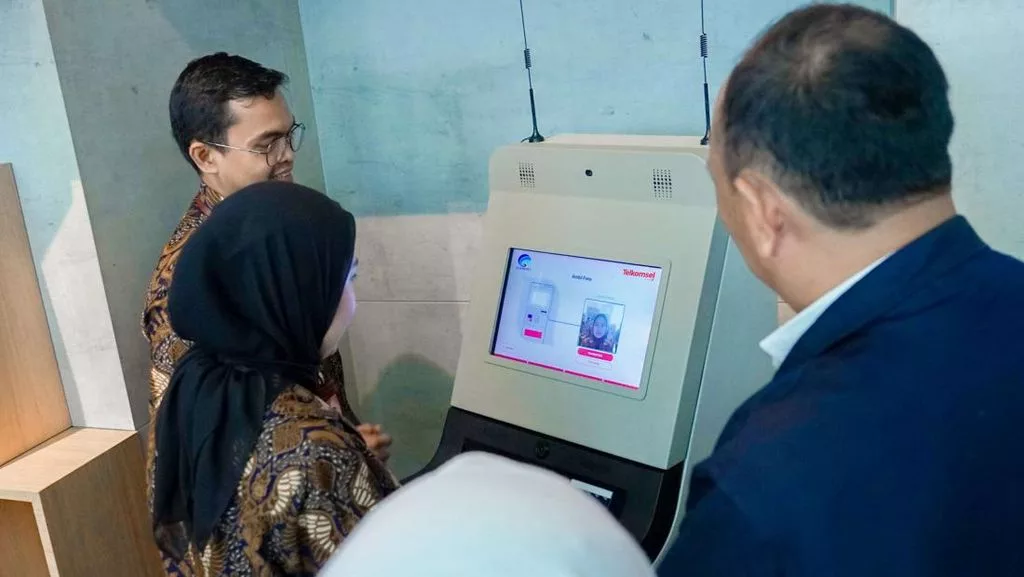
Face Scan New Mobile Number Pay IDR 3,000, Who Pays?
TechnonesiaID – Policies regarding face scan cell phone number Now officially valid at the rate of IDR 3,000 per biometric verification. This provision is contained in Government Regulation (PP) Number 10 of 2023 regarding the types and tariffs for the types of state non-tax revenue (PNBP) that apply to the Ministry of Interior. The new rules set fees for verifying data on the web, especially for services. web service with technology Facial recognition
This news has caused concern among cellular service users. Many wonder if these additional fees will be charged directly to consumers when purchasing a starter card or activating a new number. However, the government immediately provided clarifications to calm public opinion.
Contents
Cellular carriers incur verification fees
The government ensures that people do not need to spend extra money to complete this biometric verification. The Director General of the Digital Ecosystem of the Ministry of Communication and Digital (Komdigi), Edwin Hidaya Abdullah, stressed that these costs are entirely the responsibility of mobile operator. Large telecommunications companies such as Indosat Ooredoo Hutchison, Telkomsel and XL Axiata will file tariffs with the Dukcapil Interior Ministry.
This step is considered part of the company’s responsibility (commercial responsibility) from the mobile operator. Apart from this, the state is also required to protect the public in every digital transaction and data exchange activity. Therefore, the application of technology cell phone number with face scan this should not financially burden the end consumer.
The association also confirmed this payment mechanism. The Indonesian Telecommunications Providers Association (ATSI) has expressed its readiness to follow the current regulations. ATSI Vice President Reski Damayanti confirmed that currently the cost of biometric verification is borne by the cellular operator.
Why is face scanning of mobile numbers mandatory?
The shift from conventional registration methods to biometric technology is not without good reasons. So far, SIM card registration only uses the family card number (KK) and population identification number (NIK). This old method is very vulnerable to misuse of personal data, identity theft and even cases of cyber fraud like SIM card exchange and burglary mobile banking.
With this new system, treat cell phone number with face scan claimed to be much safer because it directly matched the user’s face (in real time) with biometric data recorded in the Dukcapil database. It is hoped that this preventative measure can reduce the number of cybercrimes taking place using fake phone numbers or fictitious identities.
The government is also optimistic about the implementation cell phone number with face scan will not harm the continuity of the activities of the cellular operator. Conversely, better security guarantees will increase trust (trust) people using cellular services. When people’s sense of security increases, the digital ecosystem becomes healthier, which ultimately encourages the growth of the operator’s business.
Successful trials and faster processing
Ministry of Communications revealed that this facial recognition-based registration trial has been running since January 2026. The results show a very positive trend. In April 2026, the usage volume of biometric verification will reach 300,000 transactions per day. This shows the preparation of the technological infrastructure on the part of the operator and Dukcapil.
From a user perspective, this new registration process is designed to be very convenient and not take up a lot of time. Edwin explained that the biometric verification process was very quick, in fact it took less than a minute. Users no longer have to worry about incorrectly entering long NIK or KK numbers.
“In the past, the capital for registration was eyes, you couldn’t get the number wrong. Today, the capital is a smile,” Edwin said jokingly, describing the ease of interactive facial recognition technology.
Protection of personal data remains a priority
As these technologies are implemented, the issue of personal data protection (PDP) remains a major concern. Dukcapil and the Ministry of Communication and Technology ensure that all biometric data used in this verification process is managed with high-level security standards. Data encryption is strictly implemented to prevent any potential data leakage to irresponsible third parties.
This collaboration between telecommunications service providers and government is expected to become a new standard in telecommunications. cybersecurity national. In this way, people can enjoy digital communication services more peacefully, more comfortably and protected from the threat of increasingly sophisticated cybercrime.
Ultimately, regulations regarding cell phone number with face scan It is hoped that this will create a clean, secure and trustworthy telecommunications ecosystem for all elements of Indonesian society.
PakarPBN
A Private Blog Network (PBN) is a collection of websites that are controlled by a single individual or organization and used primarily to build backlinks to a “money site” in order to influence its ranking in search engines such as Google. The core idea behind a PBN is based on the importance of backlinks in Google’s ranking algorithm. Since Google views backlinks as signals of authority and trust, some website owners attempt to artificially create these signals through a controlled network of sites.
In a typical PBN setup, the owner acquires expired or aged domains that already have existing authority, backlinks, and history. These domains are rebuilt with new content and hosted separately, often using different IP addresses, hosting providers, themes, and ownership details to make them appear unrelated. Within the content published on these sites, links are strategically placed that point to the main website the owner wants to rank higher. By doing this, the owner attempts to pass link equity (also known as “link juice”) from the PBN sites to the target website.
The purpose of a PBN is to give the impression that the target website is naturally earning links from multiple independent sources. If done effectively, this can temporarily improve keyword rankings, increase organic visibility, and drive more traffic from search results.