What is SaaS development? This is why development costs are very high.
Digital transformation encourages many businesses to provide services that are fast, flexible and easily accessible from anywhere. Software that previously worked conventionally is now starting to move to a cloud-based system to make it more scalable and operationally efficient. One of the most used models to meet these needs is Software as a Service (SaaS).
However, creating a SaaS product is not just about creating an application that can be used online. There is a careful planning process, from system architecture to infrastructure selection to resource management, so that the application remains stable as the number of users continues to increase. This is where SaaS development costs become a crucial factor as they will greatly affect product quality and business sustainability in the long run.
Contents
What is SaaS development?
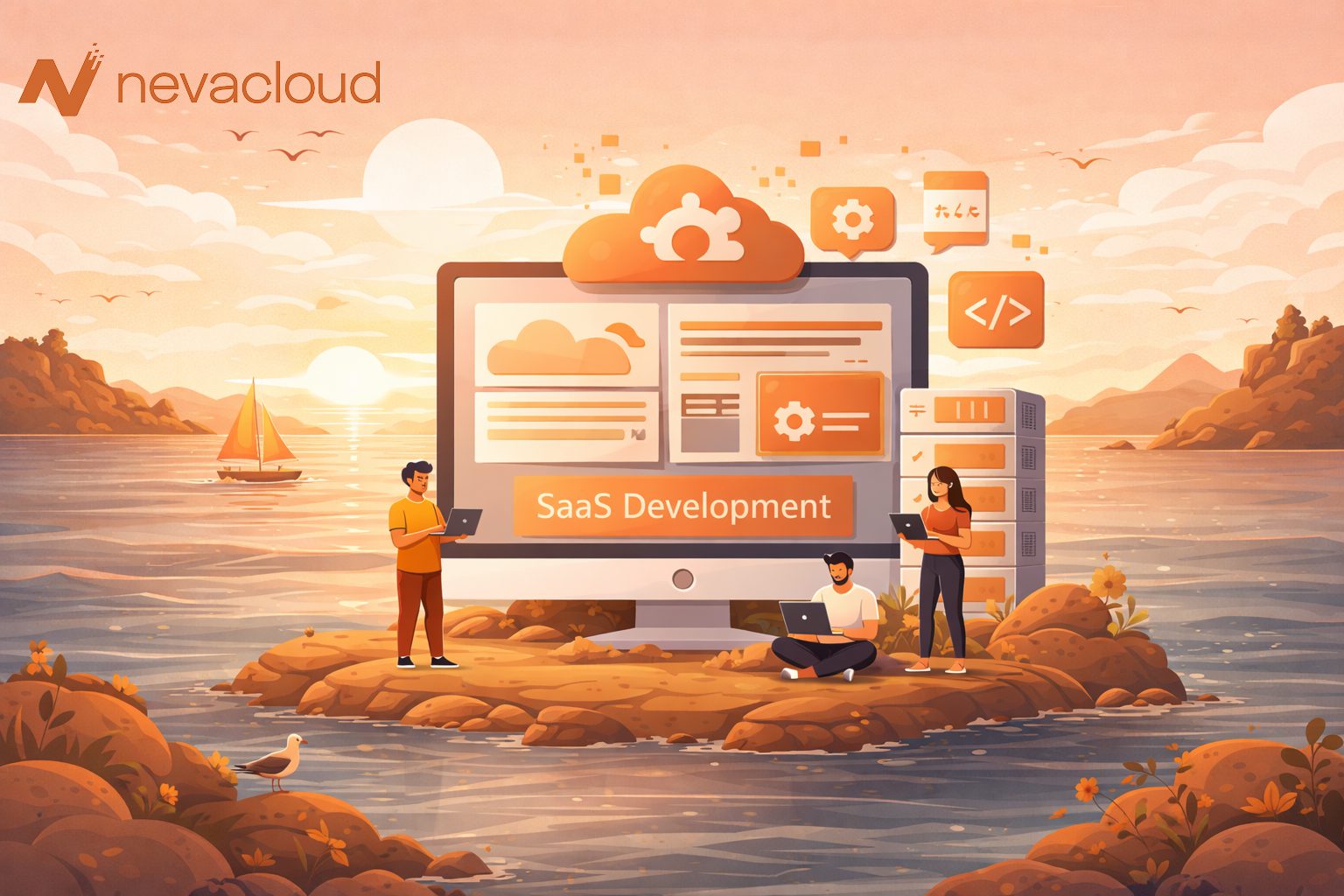
SaaS development is the process of creating cloud-based applications that are distributed over the Internet and can be used by many users on the same platform. All system updates are performed centrally so users always get the latest version without having to perform a manual installation.
This model allows companies to provide services more responsive to changing market needs. From a development perspective, SaaS also provides room for continued innovation because the system is designed to continue growing without having to rebuild from scratch.
Why SaaS is a choice for digital product development
Modern businesses need systems that not only perform well today, but are also ready for future growth. SaaS provides this flexibility because resources can be adjusted as needed, both in terms of data storage, application performance and the number of users accessing the service simultaneously.
Additionally, a faster deployment process allows companies to get their products to market faster. This is a competitive advantage, especially for startups and digital businesses operating in dynamic industries.
Important Components in SaaS Development
Cloud infrastructure as the main foundation
In SaaS, cloud infrastructure is not just a place to run applications, but becomes a determinant of service stability as the number of users continues to increase. A system designed to be scalable from the start allows resource adjustments to be made without disrupting performance, so the application remains responsive under a variety of conditions. This foundation is what allows the ongoing development process to flow more freely without being limited by capacity.
Application architecture that supports long-term development
As SaaS continues to evolve, application architecture must be flexible from the start. The modular structure makes it easy to add features, integrate services, and improve performance without having to modify the entire system. Careful planning at this stage not only impacts the technical side but also maintains profitability as the product begins to grow.
Integrated security system
Security in SaaS accompanies the development process, rather than being added at the end. Access management, data encryption and backup mechanisms must be part of the system so that services remain reliable. When this aspect is planned from the start, the risk of major repairs later can be minimized.
Why SaaS development costs should be planned from the start
Affects application quality and stability
Clear cost planning gives teams the ability to build applications with optimal performance and a consistent user experience. Without proper resource allocation, development often focuses on short-term solutions that actually limit product growth.
Determine product scalability
A SaaS prepared from the start to be scalable will more easily handle an increase in users without major system changes. This makes continuous development more efficient because the base used was designed to grow.
Avoid technical debt that hinders innovation
Technical decisions made without cost planning typically result in systems that are difficult to develop. The impact is not only high maintenance costs, but also a slowdown in the innovation process because the team must continue to improve the existing structure.
Factors Affecting SaaS Development Costs
Complexity of the functionalities developed
The complexity of features is not only seen in their number, but also in how the system processes data, manages user interactions, and connects to other services. The more complex the pipeline, the greater the need for testing and performance optimization. Therefore, determining feature priority is an important step in keeping costs under control without reducing the core value of the product.
Selection of technology and system architecture
The right technology will speed up the development process while facilitating long-term development. Conversely, an inappropriate stack can limit system flexibility and increase the need for refactoring. A modular architecture helps maintain efficiency because any new development can be carried out without disrupting existing systems.
Hosting infrastructure used
In the SaaS model, the hosting infrastructure directly affects the performance and continuity of the service. The flexible cloud platform allows resources to be dynamically adjusted so that operational costs remain balanced with application growth. In addition to maintaining uptime, this foundation also saves businesses from migration costs or major repairs when traffic begins to increase.
SaaS development cost optimization strategy without sacrificing quality
Developing the product in stages starting from the main functionalities becomes the most relevant approach to maintain efficiency. This way, companies can test the market more quickly while ensuring that future developments actually meet user needs.
Apart from this, using a flexible cloud infrastructure will help in more optimal resource management. The system can dynamically adapt to needs without having to make a significant investment up front.
In the SaaS development process, supporting a stable and scalable cloud platform will really help the team maintain optimal application performance. Nevacloud.com presents infrastructure solutions designed for modern application needs with efficient resource management, high performance and ease of scaling so that SaaS development can be more focused and sustainable.
Blanket
Ultimately, SaaS development is not just about building cloud-based applications, but also about designing digital services ready to scale without losing stability and operational efficiency. Cost planning is an important part of this process because it is directly linked to the quality of the system, the speed of innovation, and the ability of the application to accommodate growth in the number of users.
When the technology foundation is properly established, companies are not only able to launch products more quickly, but they also have the opportunity to continually grow without being burdened by repeated system changes. A flexible and scalable cloud infrastructure will help maintain a balance between performance and cost efficiency, so the team can focus more on developing features and improving user experience. With support for a cloud platform designed for modern application needs, such as that provided by Nevacloud, the SaaS development process can run more optimally with efficiently managed resources, stable performance, and the ability to scale whenever needed. With the right foundation, SaaS development will not only be more focused but will also be able to provide long-term value for digital business growth.
PakarPBN
A Private Blog Network (PBN) is a collection of websites that are controlled by a single individual or organization and used primarily to build backlinks to a “money site” in order to influence its ranking in search engines such as Google. The core idea behind a PBN is based on the importance of backlinks in Google’s ranking algorithm. Since Google views backlinks as signals of authority and trust, some website owners attempt to artificially create these signals through a controlled network of sites.
In a typical PBN setup, the owner acquires expired or aged domains that already have existing authority, backlinks, and history. These domains are rebuilt with new content and hosted separately, often using different IP addresses, hosting providers, themes, and ownership details to make them appear unrelated. Within the content published on these sites, links are strategically placed that point to the main website the owner wants to rank higher. By doing this, the owner attempts to pass link equity (also known as “link juice”) from the PBN sites to the target website.
The purpose of a PBN is to give the impression that the target website is naturally earning links from multiple independent sources. If done effectively, this can temporarily improve keyword rankings, increase organic visibility, and drive more traffic from search results.