
Analog Travel: How to Go Offline and Travel Better – Beragampengetahuan
There was a time when travel didn’t ask anything of you except that you paid attention.
You arrived somewhere, and the place revealed itself gradually: through walking, through waiting, through getting it wrong once or twice. You remembered directions because you had to. You noticed light, wind, people, textures—because nothing else was competing for your attention.
Analog (analogue) travel isn’t about going back to that time. It’s about remembering that this way of traveling is still available to us, even now, if we’re willing to choose it.
Over the past decade, travel has become increasingly mediated. Screens don’t just help us move through places; they often replace the experience of being there. We navigate, decide, document, and remember through the same device. And slowly—almost imperceptibly—the centre of gravity shifts away from the journey itself.
Analog travel begins the moment you notice that shift and decide to rebalance it.
What analog travel actually means

Analog travel is not a trend, a detox, or a rejection of technology. It’s a practice of attention.
It’s choosing fewer intermediaries between yourself and the place you’re in. Letting the body, the senses and memory do more of the work again. Allowing travel to unfold at human speed, rather than at the speed of notifications, recommendations, or optimisation.
This doesn’t require rules or purity. You don’t need to abandon your phone, shoot film, or pretend the digital world doesn’t exist. Most people practising analog travel still carry smartphones, book online, and use modern infrastructure. The difference is subtle but profound: technology stops being the default lens through which everything is experienced.
Instead of asking, What should I do here?
You start asking, What’s actually happening around me?
That shift changes the texture of a trip more than any itinerary ever could.
Why this is happening now

For many of us, this wasn’t a sudden awakening. It crept in slowly.
Somewhere around the mid-2010s, things tipped. Travel became smoother, faster, more efficient—and at the same time, strangely thinner. Then came the moment when devices began showing us how much time we spent on them each day. Seeing those numbers while traveling—while supposedly living more fully—was quietly unsettling.
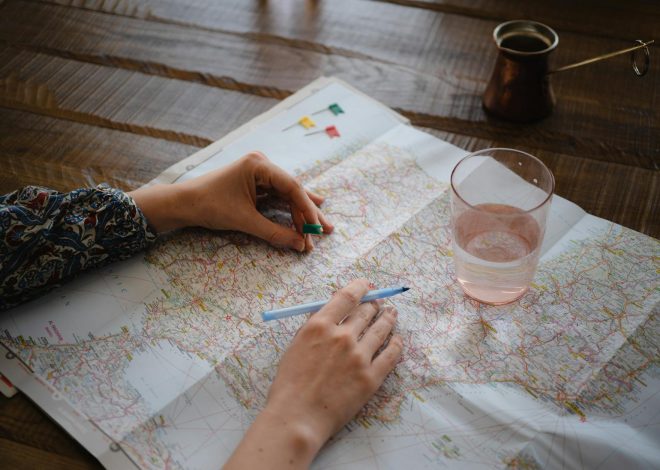
Those who traveled before smartphones were everywhere remember another rhythm. Planning meant printing information in advance, carrying folded maps, keeping notes, trusting memory. Communication happened through phone cards, emails sent from libraries, and conversations with strangers. You talked to people constantly because there was no alternative—and because it worked.
It wasn’t romantic. It wasn’t perfect. But it required presence.
Analog travel isn’t nostalgia for that era. It’s a response to the realisation that something essential got lost when every question, hesitation or silence was immediately filled by a screen.
Attention comes first

In conversations about travel, wellbeing and ethics are often treated as starting points. In practice, they’re outcomes.
Attention is the real foundation. Where you place it determines everything else.
When attention is intact, wellbeing follows naturally. Anxiety softens. Time stretches. The nervous system settles without effort. Ethics stop being something you perform or measure, because you’re present enough to notice impact as it happens—how you move, how much you consume, how you relate to people and places.
This is why analog travel aligns so seamlessly with slow and sustainable travel. It doesn’t rely on restraint alone, but on awareness. Fewer distractions lead to fewer excesses, almost by default.
What usually changes first
Analog travel rarely begins with grand declarations. It starts with small, practical decisions.
For many, the first shift is simply stepping back from social media while traveling. When there’s no audience in mind, experiences stop arranging themselves into shareable moments and begin to exist for their own sake.
Then comes photography. Not the end of taking photos, but the end of constant documentation through the same device that carries messages, alerts and obligations. Fewer images, chosen deliberately, remembered more vividly.
Airplane mode often follows—not as a rule, but as a relief. It saves battery, especially in border regions, but more importantly it restores a sense of autonomy. Connectivity becomes intentional again, not ambient.
From there, things reorganise themselves without much effort. Walking replaces short rides. Conversations replace quick searches. Getting somewhere takes a little longer—and feels fuller for it.
Nothing is missing. In fact, something fundamental has returned.
What Analog Travel Changes (in Real Life)

When something fundamental returns, you notice it first in the body, not in ideas.
Time behaves differently. Days stop collapsing into highlights. You arrive somewhere and, instead of immediately orienting yourself through a screen, you start orienting yourself through repetition: the same street walked twice, the same shop passed in the morning and again in the afternoon, the same view seen under different light.
Analog travel doesn’t make experiences bigger. It makes them thicker.
You remember where things are without checking. You develop an internal map. You start recognising faces. Small decisions stop feeling urgent. The nervous system, no longer constantly interrupted, settles into a rhythm that feels almost unfamiliar at first.
This is usually the moment people realise that traveling “with less” doesn’t feel like loss. It feels like relief.
The Return of Orientation

One of the first things analog travel restores is orientation — not navigation, but orientation.
Navigation tells you how to get somewhere. Orientation tells you where you are.
When every movement is mediated, you may arrive efficiently but remain strangely disembodied. You know the route but not the place. Analog travel reverses that. You begin to understand distance through effort, direction through landmarks, scale through time spent moving.
This matters more than it seems. Orientation creates confidence. Not the loud kind, but the quiet sense that you belong where you are, even temporarily. That sense reduces anxiety far more effectively than constant reassurance from a device ever could.
You stop feeling like a visitor passing through and start feeling situated.
Memory Without Outsourcing

Another shift happens in memory.
When experiences aren’t immediately documented, they don’t disappear. They rearrange themselves. Some moments fade. Others return unexpectedly — triggered by a smell, a sound, a texture — and they return intact.
Analog travel accepts that memory is selective and subjective. It doesn’t try to archive everything. And because of that, what stays tends to matter.
This is particularly striking for people who have been traveling with a camera or phone constantly for years. Fewer images don’t lead to weaker recollection. They often lead to stronger ones.
Travel becomes something you carry, not something you store.
Decisions Slow Down (and Get Better)

Without constant prompts, travel decisions start to take on a different quality.
You choose what’s nearby rather than what’s rated highest. You eat where you happen to be instead of where you were told to go. You walk a little further instead of jumping in a car. Not out of virtue, but because the alternative feels unnecessary.
This is where analog travel quietly intersects with sustainability — not as an ideal, but as a consequence. Fewer decisions driven by impulse or optimisation tend to result in lighter movement through a place.
You consume less because you want less.
When Travel Stops Competing With Life

Perhaps the most underrated change is this: analog travel stops feeling like an interruption of life.
Because creativity, thinking, walking, writing, observing — all the things you do at home — are allowed to travel with you, the boundary between “real life” and “travel life” softens. You don’t need to compensate. You don’t need to perform.
This continuity is especially important over time. It’s what makes slower forms of travel sustainable not just environmentally, but personally. Travel becomes a way of living differently for a while, not a separate identity you put on and take off.
Why This Matters Before We Talk About “How”

At this point, it would be easy to jump straight into tools, destinations, routes, formats.
But without understanding what actually changes when analog travel begins, those details don’t land. They risk becoming another aesthetic, another checklist, another version of “doing it right.”
Analog travel works because it restores orientation, memory, decision-making, and continuity — quietly, without asking for discipline or declarations.
Once those shifts are felt, the practical questions naturally follow:
How do you travel this way without stress?
What forms can it take?
Which places support it — and why?
That’s where we go next.
How Analog Travel Takes Shape

Analog travel doesn’t begin with a rulebook. It takes shape through small, coherent choices that reinforce each other over time. What changes is not just how you move, but how you inhabit days.
Once attention has returned—once you feel that nothing is missing—certain practices start making sense almost on their own.
Walking as the Default, Not the Exception

Walking is where analog travel becomes tangible.
Not as an “activity”, and certainly not as a wellness trend, but as the most direct way of staying awake inside a place. Walking keeps energy moving, yes—but more importantly, it keeps perception open. You breathe. You choose your route. You adjust pace without negotiating traffic or timetables. You meet people because you’re accessible.
There’s a practical intelligence to it too. Walking often gets you there faster. No jams, no parking, no mental residue. Blood sugar stays stable, the body stays warm, vitamin D sneaks in without ceremony. Movement feeds movement; the less you rely on machines, the more your body is willing to move.
This is why long-distance walking has never really gone out of style, even if its motivations have shifted. Routes like the Camí de Cavalls, which circles Menorca, aren’t compelling because they’re “scenic”. They work because they accept repetition, exposure, boredom, effort. You don’t conquer the landscape; you negotiate with it, step by step.
And you don’t need to walk for days to feel this effect. Walking daily, walking aimlessly, walking instead of checking—these are enough.
Staying Longer, Doing Less

Analog travel is deeply compatible with staying put.
When you choose one base and stop hopping, decision-making quiets down. You stop scanning for what else is nearby and start noticing what shifts subtly from day to day. The same street walked in the morning and again in the evening becomes a measure of time. Markets stop being attractions and start being places you return to.
This is where accommodation stops being a backdrop and becomes structural. Staying in villas in Menorca, for instance, can make sense not because of comfort or aesthetics, but because of what it removes: constant relocation. With a fixed base, walking becomes habitual. Cooking replaces searching. Rest stops feeling like something you have to “earn”.
The same principle applies far beyond islands. Wherever you are, staying longer allows travel to stop performing and start settling.
Getting Lost (and Knowing When Not To)
There’s a romantic idea that analog travel requires getting lost on purpose. Sometimes it does. Sometimes it doesn’t.
Life stage matters. Traveling with a young child changes the equation. Safety comes first, and there’s no need to pretend otherwise. Analog travel isn’t about proving anything; it’s about coherence.
Getting lost can be replaced by allowing space. Leaving room in the day. Not filling every hour. Choosing routes that meander rather than optimise. You can stay oriented and still be open.
The point isn’t disorientation. It’s not outsourcing orientation completely.
Airplane Mode as a Tool (Not a Statement)

One of the most effective analog practices is also one of the least dramatic: airplane mode.
Not because you’re unreachable, but because you’re unreachable by default. Connectivity becomes intentional again. The nervous system notices the difference immediately.
There’s also a quiet practicality to it. Battery lasts longer—especially useful when traveling near borders, where phones constantly hunt for signal. Attention lasts longer too. Without the background hum of notifications, the day feels less fractured.
This isn’t about being offline all the time. It’s about deciding when to be online, instead of letting the device decide for you.
Not Documenting Everything (Even If You Could)
Choosing not to document constantly is one of the hardest—and most liberating—shifts for long-time travelers and creators.
There is no place on the internet for whole lives. No archive large enough. No real interest, either. Knowing this changes how you relate to moments. You stop extracting them for later use. You let them pass through you instead.
Fewer photos don’t weaken memory. They strengthen it. What stays is what mattered. The rest dissolves naturally.
Saying this from the perspective of someone who has been blogging for years matters. It’s not a rejection of sharing. It’s an understanding of its limits.
Making Things While You Travel

Analog travel often deepens when you bring your hands into it.
A notebook. A pen. A marker. Sketches that don’t need to be good. Notes reorganised again and again. Writing that isn’t meant to be published. Marbling, drawing, thinking visually. These practices slow perception down to a tempo the body recognises.
Creativity here isn’t therapy or productivity. It’s continuity. What you do at home is allowed to travel with you. Travel stops being an interruption of life and becomes an extension of it.
Photography can live here too, with its own compromises. Digital, if that’s what fits. Fewer images. More intention. Life is made of compromises; analog travel doesn’t pretend otherwise.
Walking, Thinking, and the End of Constant Input

There was a time when walking meant filling the silence with podcasts, voices, and information. Sometimes that’s still useful.
But many people practising analog travel notice a shift: walking becomes thinking time again. Or not even thinking—just being. Especially when alone. Especially after periods when movement and space were limited.
Without constant input, thoughts organise themselves. Ideas surface unforced. Silence stops being empty and starts being spacious.
And when you’re not alone—when a child is walking beside you—attention naturally redirects. Conversation replaces consumption. Presence becomes shared.
Analog Travel Isn’t Extreme. It’s Adaptable.

Most people practise analogue travel in fragments. And that’s not a failure.
Partial analogue travel is often the most sustainable form: compatible with family life, work, responsibility, and change. Airplane mode during the day. Phones left behind on walks. One notebook instead of five apps. Fewer images. Longer stays when possible.
What matters isn’t consistency. It is direction.
Analogue travel takes shape wherever attention is allowed to settle—whether that’s on a long path, a familiar street, a page slowly filling with notes, or a walk with no particular goal.
That’s enough.
What Remains When You Stop Optimising
At some point, often without you noticing exactly when, analogue travel stops being something you practise and becomes something you recognise.
When the Noise Doesn’t Come Back

It shows up quietly. Days no longer ask to be filled. Silence stops feeling like a gap and starts feeling like space. Hours pass without checking anything, and nothing important has been lost.
This isn’t withdrawal from the world. It’s reorientation within it.
When travel is no longer constantly mediated, its purpose shifts. It stops being about accumulation—of places, experiences, proof—and returns to something more essential: the ability to rearrange perception. You don’t come back with more content to post on socials. You come back with a different sense of time, scale, and proportion.
A Way of Traveling That Fits Real Lives
This is why analogue travel endures when other trends fade.
It doesn’t rely on novelty or performance. It doesn’t ask for purity, escape, or discipline. It fits inside real lives—lives with children, responsibilities, work, limitations, contradictions. Lives that change.
It adapts. It bends. It survives contact with reality.
You don’t have to disconnect completely. You don’t have to travel far. You don’t even have to travel often. What matters is that attention is no longer permanently outsourced.
Attention as a Quiet Responsibility

Analogue travel also doesn’t pretend the world is simple.
Borders are tightening. Surveillance is increasing. Inequalities are widening. Many people cannot slow down, disconnect, or move freely. Acknowledging that reality matters.
In that context, choosing where to place your attention becomes quietly political—not in a loud or performative way, but in a grounded one.
When you walk instead of scroll, you are present.
When you stay longer instead of rushing, you extract less.
When you stop documenting everything, you stop performing your life.
When you make something—however small—you participate instead of consume.
None of this needs to be announced. In fact, it works best when it isn’t.
When Travel Becomes Continuity
Perhaps the most lasting effect of analogue travel is that it doesn’t end when the trip does.
Walking remains walking.
Silence remains available.
Creativity stays portable.
You don’t need a destination to access them again.
Travel stops being a break from life and becomes continuity—a way of inhabiting time that can move with you, wherever you are.
travel terdekat
travel agent
mobil travel, travel bag, travel umroh, travel jakarta bandung, travel, baraya travel
#Analog #Travel #Offline #Travel

Related Posts

Rasakan hidup dalam kecepatan penuh dengan Kartu Toyota Platinum baru dari Metrobank – Beragampengetahuan
Cara mempersiapkan perjalanan jangka panjang: Panduan praktis sebelum Anda pergi – Beragampengetahuan
