
What does a NYC landlord have to provide to apartment tenants? – Beragampengetahuan
If you are moving into a New York City rental apartment for the first time, it’s best to have a clear idea of what your landlord is required to provide. Heat and hot water are a given, of course—you shouldn’t have to put up with unlivable conditions—but window blinds? Don’t count on finding those.
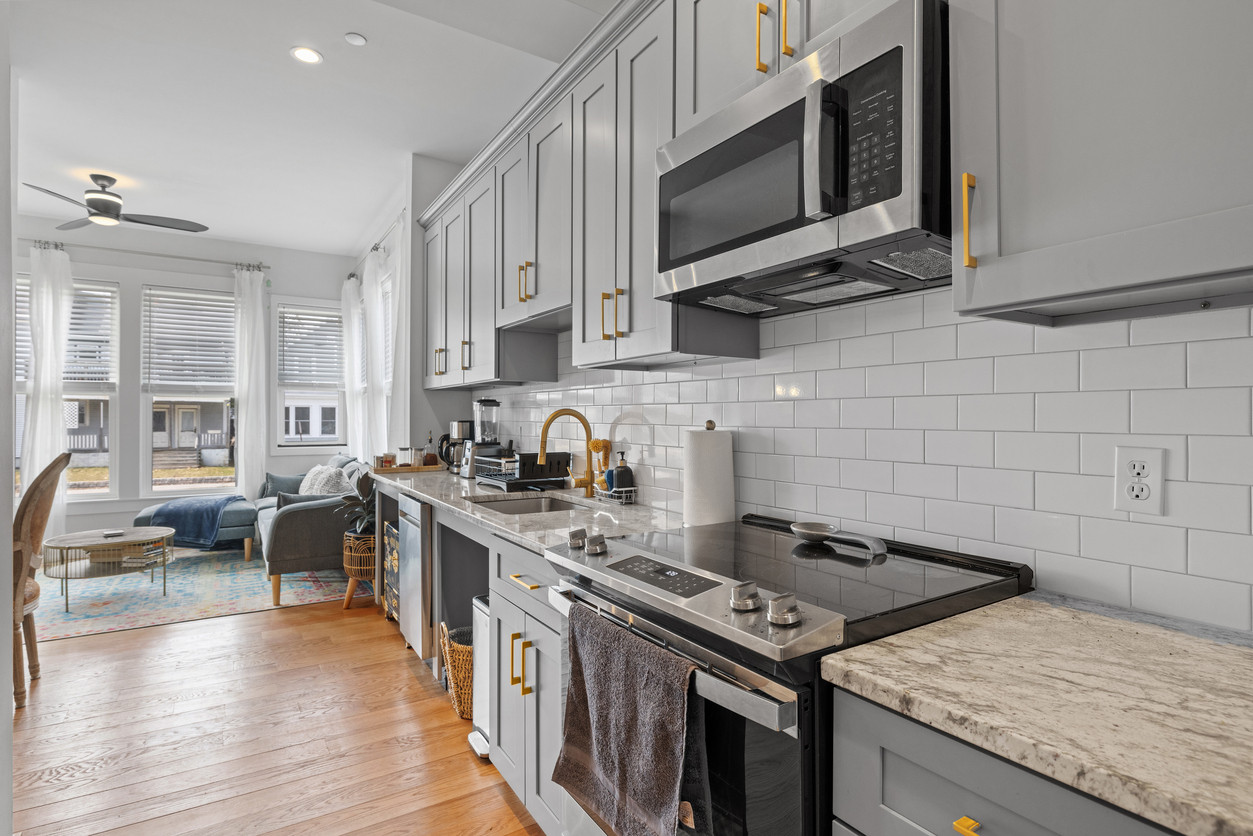
On the other hand, even though landlords aren’t obligated to provide a number of some pretty essential things, like a refrigerator or stove, most of them do anyway. It makes sense: Installing major appliances attracts renters, not just in market-rate apartments but in affordable housing and rent-stabilized units as well. Just imagine what would happen if you saw two apartments and one had a refrigerator and the other didn’t. Which one are you going to apply for?
But it can be a shock to see an apartment in person that lacks something you’re used to—like closets in the bedrooms. You may find them missing in very old buildings where New Yorkers traditionally made do with wardrobes to hold their clothes.
[Editor’s Note: A previous version of this article ran May 2023. We are presenting it again with updated information for June 2024.]
There are numerous state and local laws that outline a landlord’s responsibility. One of the most important set of rules is the warranty of habitability, which ensures the conditions in your apartment don’t compromise your health in any way. The NYC Housing Maintenance Code, the Multiple Dwelling Law, and the provisions of the Rent Stabilization Regulations are also relevant depending on the type of place you live in.
For clarity, here’s a list of 11 key items landlords are required to provide (in most NYC rental buildings), followed by a list of what they are not. Prepare to be surprised!
Contents
1. Heat—and hot and cold water
During the winter months from October 1st through May 31st, when the mercury dips below 55 degrees outside, a landlord must provide heat for a temperature of 68 during the day (6 a.m. to 10 p.m.). At night there must be an indoor temperature of at least 62 degrees maintained, regardless of the outside temperature.
This period is what’s referred to as “heat season” and building owners face fines during this time if apartments are too cold.
Hot water must be provided 365 days per year at a constant minimum temperature of 120 degrees Fahrenheit.
This issue came up during Brick Underground Office Hours—a live forum that addressed questions about renter’s rights.
2. Smoke and carbon monoxide detectors
Landlords must provide and install at least one approved and operational carbon monoxide detector and smoke detector in each apartment. “The caveat here is that you—the renter—must maintain a set of working batteries. At move-in, the apparatus must be working, but keeping it working is on you,” said Mike Jeneralczuk, an agent at Living New York. If you break or remove a detector, you are required to replace it.
3. Fire safety measures
Your apartment should have a Fire and Emergency Preparedness Guide posted on the inside of your front door. This information also needs to be posted in the common area and distributed to each dwelling, new tenants, and annually during fire prevention week. It’s worth a read too—it will tell you how to stay safe in a fire. Generally, this guidance will direct you to leave the building, close the door, and call 911. In some buildings, however, you may be safer staying in your apartment. The fire escape plan will tell you if this is the case.
Another feature of buildings with three or more apartments is self-closing doors—these can help prevent fire and smoke from one apartment from spreading quickly throughout the building. Your landlord must also make sure there are clear, unobstructed exits. And if you have a gas stove, you can request stove knob covers that can keep them off-limits from pets or kids. If there’s a child living with you under the age of six, stove knob covers should be provided regardless of your request. (Read Brick’s fire safety checklist for details.)
Also, if you’re thinking of installing a key-locked gate on your fire escape window, or a double-cylinder lock, think again—they’re illegal. (The same goes for using a fire escape for storage.)
4. Pest-free residences
Chances are you will come across some icky critters while living in a NYC apartment, but know that your landlord has an obligation to keep the building free of pests. Property owners are also required to use ongoing measures to prevent infestations in or around their buildings. This is a requirement of Local Law 55, passed in 2018. If mice, rats, or roaches are in either an apartment or common area, it’s a violation and the landlord faces fines. You may want to take action yourself by following advice from a pest expert.
Apartment building owners must also annually inspect units for indoor allergen hazards, including mice, rats, roaches, and mold.
As for bedbugs, New York State law requires property owners to disclose infestation history dating back one year to new tenants through the bedbug disclosure form you get with a lease. They must also submit an annual report on bedbug infestations and eradication methods. However, a Brick Underground investigation found that a small number of landlords are not truthful on their disclosure forms.
5. Lead-free walls
NYC banned the use of lead-based paint in residential buildings in 1960, but it can still exist in buildings built before then. That was the purpose of the city’s Childhood Lead Poisoning Prevention Act, which was enacted in 2004 and requires landlords to identify and remediate lead-based paint hazards in apartments where there are young children under the age of six years old. (It is the parents’ responsibility to notify landlords of any kids under six in the home.) And in January 2021, the act was expanded to cover mom-and-pop landlords, too.
6. Paint or wallpaper on the walls
Landlords need to paint or cover your apartment’s walls with wallpaper—so no exposed sheetrock—and they should also repaint or recover the walls every three years. Sarah Adler, an agent at Corcoran, said the requirement to repaint often comes as a pleasant surprise to renters.
“If someone is settling into a place and they have been there for five years or so, sometimes they are not even aware of the fact that they have the right to have that apartment painted every three years,” she said
Just don’t expect a landlord to volunteer to do this on their own—it’s up to you to make the request (and prepare to do some negotiating to get it done quickly).
The only time the cost of painting can be passed to the tenant is if you request a special brand of paint or a particular color, in which case you may buy the paint yourself. But if you are covering dark paint that you applied yourself, or if you cause damage that requires a new paint job, you’ll likely have the cost of painting deducted from your security deposit.

Brick Underground’s
Gross Rent Calculator
Some New York City landlords offer a free month (or more) at the beginning or end of a lease. The advertised rent is the net effective rent. The net effective rent is less than the amount you will actually have to pay — known as your gross rent — during your non-free months.
Brick Underground’s Gross Rent Calculator enables you to easily calculate your gross rent, make quick apples-to-apples comparisons between apartments and avoid expensive surprises. All you’ll need to figure out your gross rent is 1) the net effective rent, 2) the length of your lease, and 3) how many free months your landlord is offering. [Hint: Bookmark this page for easy reference!]
To learn more about net effective versus gross rents, read What does ‘net effective rent’ mean?.
7. Windows and natural lighting
With some exceptions, every room, including kitchens and bathrooms, should have at least one window opening onto the street, yard, or other outdoor space. This applies to apartment buildings built after 1929 and is outlined in the Multiple Dwelling Law. Each window must properly light all portions of the room.
If there isn’t a window in the bathroom or kitchen, then there are requirements to provide exhaust fans.
8. Window guards
Owners must provide and install window guards on all windows, including first-floor bathrooms and windows leading onto a balcony or terrace, in apartments where a child 10 years of age or younger resides, and in each common area window, if there are any.
Even if you don’t live with a child of 10 years or younger, but you want guards—maybe you have friends or family who bring young children to visit you—you can still request them and the landlord is required to install them.
You see window guards most often in prewar buildings. Adler said in new construction, windows only open four inches for safety reasons, making the window guards redundant.
9. Locked front door and a peephole
Most buildings must have a locked front door to provide some security so people can’t walk right into the building.
In addition, your entry door should have a lock, and the landlord must give you at least one key to it. In an apartment building with more than three units, the door should have a heavy-duty deadbolt operable by a key from the outside and a thumb-turn from the inside, as well as a heavy-duty latch set. There should also be a chain door guard so you can partially open your door. This is all outlined in the Housing Maintenance Code.
Your entrance door should also have an operating peephole that’s located in a place that lets you view any person immediately outside the door.
As for locks on windows: If you want them you have to install them yourself.
10. Mail service
Receiving your mail in a secure and timely manner is absolutely your right as a renter. Nothing like having to dig through a heap to find your paycheck or (now overdue) bill.
The Housing Maintenance Code makes clear landlords are required to provide and maintain approved mailboxes and directories of tenants so they can get their mail. With the rise of next-day delivery and online shopping, landlords are unlikely to argue with this, because if they don’t provide mailboxes, they have to take in the mail themselves and get their own employees to distribute it.
11. Amenities
If you live in a market-rate apartment, your landlord must give you access to the amenities spelled out in your lease. In a rent-regulated apartment, the amenities you have are governed by the Rent Stabilization Law’s concept of required services.
And be aware that if there are services provided to you in a rent-stabilized apartment, when you moved in, they need to be maintained.
For example, if you live in a rent-stabilized apartment and the landlord decides to take away the gym or the bike storage, they’d have to ask permission from the Division of Housing and Community Renewal. Sometimes DHCR gives authorization but with conditions. If the doorman is discontinued, the landlord must come up with a replacement that provides an equivalent level of security, which could be an intercom system or camera.
If the landlord does not ask permission or permission isn’t granted you can file a reduction of services complaint and your rent will be rolled back and frozen until the services are returned.
In a market-rate apartment, if a particular amenity is listed in the lease, like the laundry room or a doorman, then they must be provided for the duration of that lease. If they are not, it’s a breach of contract and the tenant would be entitled to some kind of damages.
11 things landlords are not required to provide
Many first-time renters are surprised to find out what’s excluded from a landlord’s list of responsibilities, but these things shouldn’t come as a shock: Your lease spells out what you can expect—and conversely, what is not included, a good reminder to always read your lease very carefully and in advance of moving in.
“The clear-cut answer is the lease defines what’s present,” Jeneralczuk said.
Below are some of the more common amenities and services you might find missing in a NYC rental.
1. Washer/dryer
For sure, having an in-unit washer/dryer combo is a renter’s dream (beating out dishwashers). But your odds of finding a rental apartment with your own appliances is about as likely as winning the lottery—slim to none. Older buildings simply don’t have the electrical load or plumbing infrastructure to handle all those machines; there are also issues around gas lines and ventilation for gas dryers.
Some buildings ban in-unit washer/dryers outright. In others, you can request permission to cover the cost of installation yourself, though there are many logical reasons why the answer might be no.
2. Microwave and dishwasher
A lot of renters, particularly new ones, assume a kitchen will come with a microwave, but it’s your responsibility to buy one if you want one. The same goes for a dishwasher. Of course, a lot of landlords install these appliances to make their apartments more competitive and attract new tenants.
“Some clients from outside New York are shocked that landlords sometimes do not provide them. Sure, they’re present in a lot of apartments, but they come with a price tag and are definitely not a given,” Jeneralczuk said.
3. Air conditioner and installation
If landlords are required to keep the heat on in the winter, you might expect they’d have to provide cooling in the summer but that’s not the case. When you’re looking for a rental and viewing a listing you might even see an AC unit in the apartment, but find it’s gone by the time you move in.
Many NYC tenants buy their own in-window AC units and then take them with them when they leave.
If you purchase an AC, you’ll also be responsible for installing it. Your management company won’t pay for this but they may be able to give you the name of a contractor so the install can be done safely. Sometimes you can pay the super out of your pocket to do the job for you, so ask your neighbors what they usually do.
4. Refrigerator and stove
You’d be hard-pressed to find an apartment without a refrigerator or stove, however, a landlord is not legally required to provide either of these appliances.
In some apartments, the refrigerator is very small, or the stove might just be a cooktop or two-burner as opposed to a full-size oven. It’s possible the landlord could say the tenant has to provide their own appliances and repair them at their own expense.
Whatever appliances owners do provide, they are responsible for keeping them in working order. A landlord is also responsible for providing the gas to power a stove so even if you are asked to install your own appliance, the power must be there to make it function.
5. Fire extinguishers
The NYC fire code doesn’t require that your landlord put portable fire extinguishers in your apartment or in any public hallways or corridors in the building.
This might seem counterintuitive but the Fire and Emergency Preparedness Guide attached to your front door has the instructions the Fire Department wants you to follow—usually leave the building, close the door, and call 911. Asking you to struggle with a fire extinguisher you have probably never used before will slow your efforts to get out, delay you from alerting the fire department, and increase risks for residents in the building.
You can, of course, buy your own extinguishers but you should still follow the fire escape plan provided by your landlord and keep in mind that extinguishers benefit from periodic inspections by a licensed company.
One caveat: A stationary fire extinguisher must be installed in any area with fuel-burning equipment, so you should see one in your building’s mechanical room where the boiler or hot-water heater is installed.
6. Window screens, shades, and curtain rods
Window screens are yet another provision that many people expect but that landlords are not required to provide. Adler said this is often a surprise for renters who find mosquitoes are a big problem in the city during the summer.
“Most windows can only open the four inches for NYC child safety, so depending on what kind of window it is, sometimes the screens need to be custom built,” she said. Another option is to purchase a tension screen that can be fitted into an open window, yet this is not a landlord’s responsibility.
And if you don’t see curtains or blinds in the listing for a rental, don’t assume it’s because the owner is waiting to install them. That’s on you.
7. Light bulb replacements
The lights should be working when you move in, but when the bulbs burn out, it’s your job to replace them.
What if you hate the light fixtures in your rental? Don’t assume you can swap out that frosted-glass relic with something more modern. Always ask first—and prepare to be disappointed.
8. Reimbursement for personal losses or damages
Landlords are not responsible if the apartment is damaged unless it is due to gross negligence.
If there’s a leak and some property gets damaged, the landlord is not responsible for your possessions. Occasionally, a landlord may agree to a settlement, but the solution is for tenants to have renter’s insurance. It’s not very expensive and covers these kinds of situations.
9. Top locks and replacement keys
A landlord needs to provide just one functioning lock on your apartment door. Any additional locks you might want for security are your responsibility.
If you lock yourself out and your super is not available to let you in, you will have to call a locksmith and pay for the new lock and keys.
And if you lose your key and need another? Your landlord can charge you for a replacement.
10. Closets
A bedroom in NYC must be at least 80 square feet in size with at least one window, but not all bedrooms come with closets. A tenant might ask a landlord to build a closet before moving in, or ask for money toward buying a wardrobe, but that’s entirely up to the landlord. As a renter you have more leverage when the renter market is slow, and very little leeway when competition for apartments is high.
11. Security for delivered packages
Package theft is a huge issue now that online shopping is the norm. It’s especially a challenge for buildings where there is no doorman.
But get this: If a package left in the lobby or by a tenant’s front door is then stolen, the landlord is not on the hook. “Even if there is no package room and it is left in a vestibule, they are not responsible for the loss,” Adler said.
If the issue continues, you can push to have a video surveillance system installed in the building—or just schedule delivery when you are home.
Previous versions of this article included writing and reporting by Donna M. Airoldi and Emily Myers.
properti rumah
properti rumah minimalis
brosur properti rumah, iklan properti rumah
, beragampengetahuan properti terbaru 2023, cara jual rumah ke agen properti, agen jual beli rumah jasa properti, properti rumah mewah
#NYC #landlord #provide #apartment #tenants

Related Posts

Amazon menambahkan feed sehingga pedagang dapat memperoleh eksposur melalui Shop Direct – Beragampengetahuan
